BUY AM-2202 ONLINE
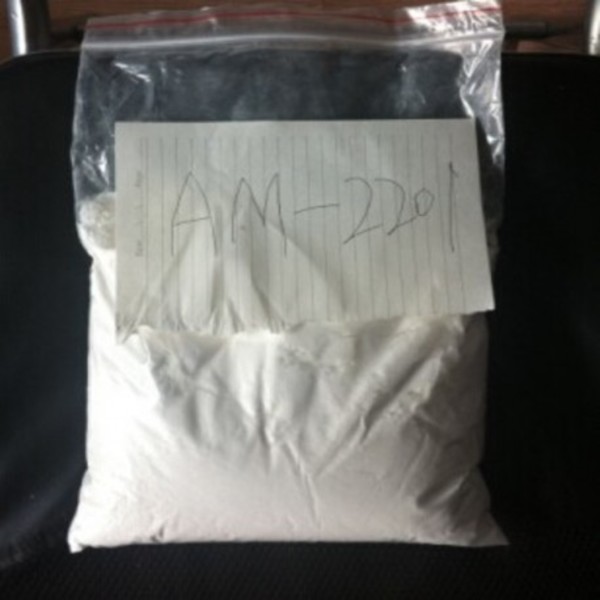
AM-2202 is a synthetic cannabinoid, a type of lab-made chemical designed to mimic the effects of THC — the main psychoactive compound in cannabis. It belongs to the naphthoylindole chemical family, which includes other well-known synthetic cannabinoids like AM-2201 and JWH-018. Buy AM-2202 Online.
Chemical compound
- AM-2202 (IUPAC roughly: 1-(5-hydroxypentyl)-1H-indol-3-yl)(naphthalen-1-yl)methanone) — the full name from a spectral database.
- Molecular formula: C₄₀? Sorry, correction: C₂₄H₂₃NO₂ (Mol. mass ~357.17 g/mol).
- It is part of the “naphthoylindole” family of synthetic cannabinoids (i.e., compounds designed to mimic the effects of cannabis by acting on cannabinoid receptors).
- Structurally: an indole core substituent with a naphthoyl (naphthalene-carbonyl) moiety and a 5-hydroxypentyl side chain
How It Works
AM-2202 acts as an agonist (activator) at the CB1 and CB2 receptors in the brain and body — the same receptors THC targets.
However, synthetic cannabinoids like AM-2202 are often much more potent than THC, meaning even tiny doses can cause strong and unpredictable effects. Buy AM-2202 Online.
AM-2202 FOR SALE
AM-2202 is a synthetic cannabinoid of the naphthoylindole class, identified in some “herbal blend” recreational products. While it mimics cannabis-type effects via the cannabinoid receptors, its potency, side-effect profile, and toxicity are not well characterized — making it potentially dangerous. Forensic detection has confirmed its presence in unregulated products. Use outside regulated medical/research context carries significant risk. Buy AM-2202 Online.
Reported Use & Forensic Detection
-
AM-2202 has been identified in herbal “incense” or “herbal blend” products marketed as legal alternatives to cannabis. For example, in Tokyo in 2011, it was found as an adulterant in products.
-
It appears in forensic-toxicological libraries: SpectraBase lists it with GC-MS and NMR data.
-
Some commercial sites list it as a “research chemical” or reference standard: e.g., available for sale (although such sale/use may be illegal or uncontrolled) in bulk for “research” use.
Forensic Notes
- First identified around 2011 in Japan in seized “herbal” products.
- Detected via GC-MS and LC-MS forensic methods.
- Used mainly in laboratory or toxicology research — not approved for human use.